
I love my job. All day, we get to meet wonderful women either on the verge of motherhood or who are already wrangling toddlers and wondering about their options in diapering. Our job is to teach, to empower these mamas to fearlessly walk past the entire aisle devoted to disposable diapers in the grocery store! Most women come in either totally excited, or cautiously curious about cloth diapering. Either way, they all have questions:
"How many diapers do I need?"
"Should I do all one-size diapers or prefolds and covers?"
"What the heck is a prefold?!"
And my favorite, the one that EVERYONE asks:
"But, wait, what do I do with the poop?!"
I'll admit it, before I was a cloth diapering mama, this one stumped me a little bit too. The idea of just throwing a big, poopy mess into my washing machine wasn't pleasant. Wouldn't the poop get all over everything else? Was my ancient machine really up to the task?
Not to be too graphic, but not all poop is the same! Here's the deal:
Mustard Poop: For newborns and older babies who are exclusively breastfed, all you need to do is wash your diapers as usual. Wash them in cold or warm water, but not hot since it can actually lock in odor. Some people like to do a short (30 minute) pre-soak, but don't soak them for too long because it can cause the materials to break down. Use a regular amount of detergent; using too much can cause detergent to build up and make your diapers stink like a wet dog. Some recommend a second rinse at the end just to make sure all the detergent is out, but if you use the right amount (per your detergent's directions) you shouldn't have to do this every time.
Peanut Butter Poop: For older babies who are nursing and eating some solids, as well as for formula-fed babies whose poop can be a much different consistency than breastfed babies' poop, follow the same routine as above. If you have staining, wash your diapers as usual, but instead of drying them in the machine, lay them outside, stain up, in the sunshine for thirty minutes or so. This also works in a windowsill. The sun will bleach your diapers to look like new! If you have a yard, and weather permitting, line drying your clothes is a great way to save energy and money! Just don't underestimate the power of the sun- leaving them out all day will fade your colors.
Solid Poop: For toddlers who have solid poop, just take the soiled diaper to the bathroom and plop the solid waste into the toilet. Sometimes there's hardly anything left on the diaper! Then just follow the same routine as above. In fact, many brands of disposable diapers say right on the package that you are supposed to dump solid waste into the toilet before throwing the diaper away. But really, who does that? That means that all that human waste is going into our landfills and slowly leaching into our earth and waterways. Yuck!
So, this is the next question almost everyone asks: "What about those diaper sprayers?"
We do carry diaper sprayers if you want them. They hook right up to your toilet's water pipe and can help you flush any mess out of your diapers into the toilet. However, it's really more of a preference than a necessity. I prefer to keep things as simple as possible. If my washing machine can get my diapers totally clean without pre-spraying them, I'm probably not going to do the extra step of spraying. But if your diapers don't come out as clean as you'd like, then perhaps a sprayer would help! You can order one here.
Most diaper brands recommend washing your diapers every 2 -3 days. Any longer, and they may develop an "odor stain," meaning, the smell is there to stay. Store dirty diapers in a dry pail or bag. It doesn't need to be air-tight, and in fact, it will smell much better if you allow air to circulate somewhat. I wouldn't stick my head in our laundry bag, but at least when it's time to do the wash I'm not gasping for air! As I mentioned above, leaving your diapers to soak in a wet pail can cause the materials to break down and can make your diapers smell much worse. Plus, with a wet pail, what do you do with all the poopy water?
I love the PlanetWise hanging wet bag as a laundry bag. It hangs on a door knob or on the changing table, and will hold at least three days worth of diapers. It has a wide, zippered opening so you never have to squeeze a dirty diaper in. When it's time to do the wash, just carry it by its sturdy handles to the laundry room and dump everything in. If you remove the inserts from your pocket diapers before you put them into the laundry bag, and if you use cloth wipes, instead of disposable wipes, you don't have to sort through anything when it's time to do the wash. I'm all for less gross!
I hope that answers any questions you have about how to care for your cloth diapers! If you still have more, please don't hesitate to contact us. All our contact info is on our website!
Tuesday, August 31, 2010


Monday, August 23, 2010
Estrogen in Your Sippy Cup?
An alarming story was recently in the news: studies conducted in three major cities show that girls are hitting puberty much earlier than before, some as young as seven years old. I don't know about you, but when I was in second grade, I didn't even know what puberty was! Some of these little girls are being treated with a device implanted under the skin which stops hormonal spikes, thus putting puberty off for a few more years. But wouldn't it be better to prevent the whole problem in the first place?
 The obvious question is, why? What has changed in our world that our little girls are maturing so quickly? You'd think that with a lengthening average lifespan, girls would be hitting puberty later, not earlier. As a mama of a sweet little girl (almost a year old!), this article got me thinking.
The study didn't go into the reasons for the phenomenon, its job was just to document it. There will need to be further studies to explore the real causes. However, several experts weighed in. Dr. Frank Biro, director of adolescent medicine at Cincinnati Children’s Hospital and lead author of the study suggests there is a link between the obesity epidemic in children and premature puberty. Dr. Stanley Korenman, an endocrinologist at the University of California, Los Angeles believes exposure to estrogens in plastics, chemicals and foods may be to blame.
I'm no plastics engineer, but if I were making, say, plastic sippy cups, it wouldn't occur to me to throw some estrogen into the mix. And I have yet to see "estrogen" listed under the ingredients of any recipe I've used. So where are our kids getting it?
 Another study found that one of the most concerning endocrine disruptors, polybrominated diphenyl ethers (or PBDEs), are found in relatively high concentration levels within our own homes and that for some reason, small children carry higher levels of it than their parents. Again, the specific cause of this circumstance is unknown, but, the most common sources of PBDEs in the home are furniture, carpet, and cleaning supplies used within the home. PBDE is a flame-retardant, that, when given to still-developing laboratory mice, disrupts thyroid and estrogen hormonal levels, causing hyperactivity among other developmental issues.
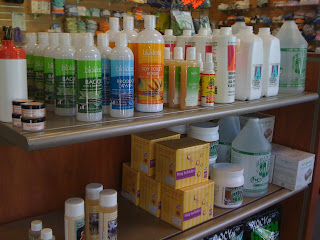
So, what can we as parents do to avoid these endocrine disruptors? Dr. Biro suggests that families live "green," eat a healthy diet, and get plenty of exercise outside. If you are expecting a child, or are currently a parent, please see our website or come into the store to see our selection of "green" cleaning supplies, as well as safe bottles, sippy cups, food containers, plates and eating utensils. Let's keep our kids healthy, safe, and happy!
 The obvious question is, why? What has changed in our world that our little girls are maturing so quickly? You'd think that with a lengthening average lifespan, girls would be hitting puberty later, not earlier. As a mama of a sweet little girl (almost a year old!), this article got me thinking.
The study didn't go into the reasons for the phenomenon, its job was just to document it. There will need to be further studies to explore the real causes. However, several experts weighed in. Dr. Frank Biro, director of adolescent medicine at Cincinnati Children’s Hospital and lead author of the study suggests there is a link between the obesity epidemic in children and premature puberty. Dr. Stanley Korenman, an endocrinologist at the University of California, Los Angeles believes exposure to estrogens in plastics, chemicals and foods may be to blame.
I'm no plastics engineer, but if I were making, say, plastic sippy cups, it wouldn't occur to me to throw some estrogen into the mix. And I have yet to see "estrogen" listed under the ingredients of any recipe I've used. So where are our kids getting it?
 Another study found that one of the most concerning endocrine disruptors, polybrominated diphenyl ethers (or PBDEs), are found in relatively high concentration levels within our own homes and that for some reason, small children carry higher levels of it than their parents. Again, the specific cause of this circumstance is unknown, but, the most common sources of PBDEs in the home are furniture, carpet, and cleaning supplies used within the home. PBDE is a flame-retardant, that, when given to still-developing laboratory mice, disrupts thyroid and estrogen hormonal levels, causing hyperactivity among other developmental issues.
So, what can we as parents do to avoid these endocrine disruptors? Dr. Biro suggests that families live "green," eat a healthy diet, and get plenty of exercise outside. If you are expecting a child, or are currently a parent, please see our website or come into the store to see our selection of "green" cleaning supplies, as well as safe bottles, sippy cups, food containers, plates and eating utensils. Let's keep our kids healthy, safe, and happy!
Monday, July 12, 2010
Opt-Out of Waste!
 Since you're reading our marvelous blog, I guess it's safe to assume that you're familiar with a little invention called the Internet. And since you're such an internet pro, you probably know that you can access the Yellow and White Pages with a click of your mouse. And if you're anything like me, you get at least one new phone book delivered every few months whether you want it or not!
 Not being a professional statistician, I can't tell you exactly how many trees we're chopping down to make the myriad hard copy phone books, but it's estimated (by professional statisticians) to be in the millions! Additionally, the toxic chemicals used to turn trees into paper also turns our sky brown.
So if you're tired of receiving these paper bricks, CLICK HERE and opt-out!
Saturday, July 10, 2010
Welcome to Eco-Politan!

We are located in the Lakewood Commons shopping district on the Southwest corner of Alameda and Wadsworth in Lakewood, CO.

Come on in!

We have loads of baby carriers!

We carry the largest selection of cloth diapers in the Denver area.

Not to mention plenty of inserts and boosters.

We carry everything from all-in-ones, to pocket diapers to prefolds!

We have the cutest Thirsties' covers with Velcro or snaps!
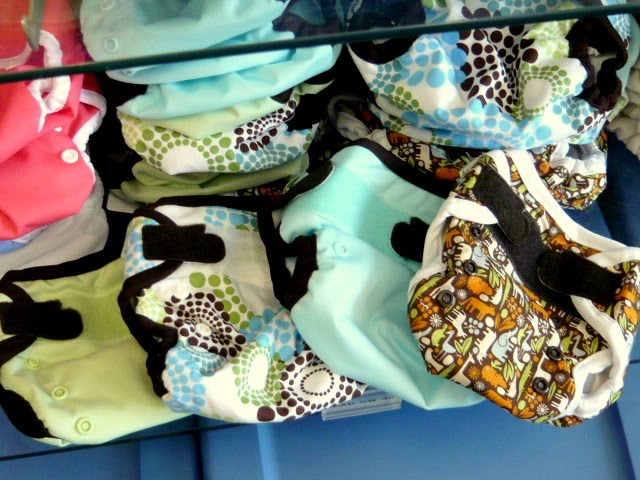
Including these adorable new covers from Weehuggers.

Going swimming? We've got you covered this summer with the sweetest swim diapers!

We have a wide selection of cloth-diaper safe wipes solution, diaper creams and detergents.

Everybody loves Rumparooz!

Our stroller-friendly ramp makes shopping easy!

Every baby needs Babylegs.

Let your little ones play in our playroom while you shop!

We carry eco-friendly toys for the big kids, too!

Wheely Bugs, Prince Lionheart Wooden Balance Bike, and Melissa & Doug puzzles!

Toys, toys, toys!

Kleen Kanteens, bottles, and sippy cups-- we've got your hydration covered!

As you can see, we have a lot more than just cloth diapers!
.JPG)
And our all-mom staff is always happy to help! We can't wait to meet you, come say hello!
Monday, June 28, 2010
The Great Detergent Debate
Ask any cloth diapering mama about the kind of detergent she uses to keep her diapers clean and you're likely to get into quite a discussion! Some swear by regular blue Tide, others would gasp at the idea! If you're new to cloth diapering, simply learning about prefolds, pocket diapers, and double vs. single gussets might have your head spinning, but now that you're investing in cloth, you need to know how to keep it performing at its best!
Why does it matter which kind of detergent you use?

Why does it matter which kind of detergent you use?

Some detergents contain softeners, which seems like a great idea. You want everything that touches your baby to be soft, right? The problem with softeners, whether in your detergent or added separately, is that they will cause your diapers to leak leak leak! They soften the fabric by coating the fibers with a waxy like substance that will make your diapers water (and therefore pee) resistant. Same goes for most diaper rash creams. For ointment that is safe to use with your cloth diapers, click here.
Those amazing detergents that get even your husband's socks clean owe it all to protein-eating enzymes. Get ready for a little Biology 101: Enzymes are naturally occurring proteins that act as catalysts for the other proteins around them. There are hundreds of types of enzymes and commercially, they are very popular: they are used to tenderize meat, help lactose-intolerant people happily enjoy ice cream in the form of Lactaid, aid in beer brewing, and even show up in baby food to "predigest" some of it. (Gag!) Enzymes are also used in paper, rubber, and film manufacturing. Our bodies are full of enzymes, working as catalysts for ongoing cellular growth and repair. So enzymes themselves are not the enemy!
However, the specific type of enzyme found in many popular fabric detergents can pose a big problem for your baby's behind. The type of enzymes found in most laundry detergents help lift stains by eating organic matter such as grass, dirt, sweat, and poo. However, those enzymes can also react with your baby's skin, especially when you add pee into the mix. This can cause your baby to develop a serious, blistering diaper rash!
 Additionally, avoid detergents with "whiteners" or "brighteners." These detergents aren't actually whitening or brightening your clothes, they are covering them with phosphates. Have you ever played in the ocean after sundown and noticed the water glowing when you splashed in it? Phosphates absorb invisible ultraviolet light and re-emit it as blue light, just like glow-in-the-dark toys. While phosphates may make your clothes appear brighter, the chemical residue can cause a rash or allergic reaction. As if that weren't a good enough reason to avoid them, phosphates, although a natural and necessary element in nature, can wreak havoc on ecosystems when they get out of proportion.
Say that your well-meaning husband, or maybe even you-- in your most sleep deprived state, accidentally washes the diapers in a detergent containing softeners, enzymes or whiteners? Don't fret, you can fix this! You will need to strip your diapers: You can either wash them on hot two or three times without any detergent until the water is clear and free from suds or wash them once on hot with just a little squirt of Dawn dish soap. Don't try that on an HE machine, though! It's not a bad idea to strip your diapers every so often, just to keep them free from detergent buildup which can also affect absorbency and cause your diapers to get a little stinky.
On our website you can find a wide variety of detergents that work well and are safe for your diapers, baby, and our Earth.
Those amazing detergents that get even your husband's socks clean owe it all to protein-eating enzymes. Get ready for a little Biology 101: Enzymes are naturally occurring proteins that act as catalysts for the other proteins around them. There are hundreds of types of enzymes and commercially, they are very popular: they are used to tenderize meat, help lactose-intolerant people happily enjoy ice cream in the form of Lactaid, aid in beer brewing, and even show up in baby food to "predigest" some of it. (Gag!) Enzymes are also used in paper, rubber, and film manufacturing. Our bodies are full of enzymes, working as catalysts for ongoing cellular growth and repair. So enzymes themselves are not the enemy!
However, the specific type of enzyme found in many popular fabric detergents can pose a big problem for your baby's behind. The type of enzymes found in most laundry detergents help lift stains by eating organic matter such as grass, dirt, sweat, and poo. However, those enzymes can also react with your baby's skin, especially when you add pee into the mix. This can cause your baby to develop a serious, blistering diaper rash!
 Additionally, avoid detergents with "whiteners" or "brighteners." These detergents aren't actually whitening or brightening your clothes, they are covering them with phosphates. Have you ever played in the ocean after sundown and noticed the water glowing when you splashed in it? Phosphates absorb invisible ultraviolet light and re-emit it as blue light, just like glow-in-the-dark toys. While phosphates may make your clothes appear brighter, the chemical residue can cause a rash or allergic reaction. As if that weren't a good enough reason to avoid them, phosphates, although a natural and necessary element in nature, can wreak havoc on ecosystems when they get out of proportion.
Say that your well-meaning husband, or maybe even you-- in your most sleep deprived state, accidentally washes the diapers in a detergent containing softeners, enzymes or whiteners? Don't fret, you can fix this! You will need to strip your diapers: You can either wash them on hot two or three times without any detergent until the water is clear and free from suds or wash them once on hot with just a little squirt of Dawn dish soap. Don't try that on an HE machine, though! It's not a bad idea to strip your diapers every so often, just to keep them free from detergent buildup which can also affect absorbency and cause your diapers to get a little stinky.
On our website you can find a wide variety of detergents that work well and are safe for your diapers, baby, and our Earth.
Subscribe to:
Posts (Atom)